
The Real Cost of Owning a Printer: Cheap Printer vs Cheap Ink
Table of Contents
01 Event
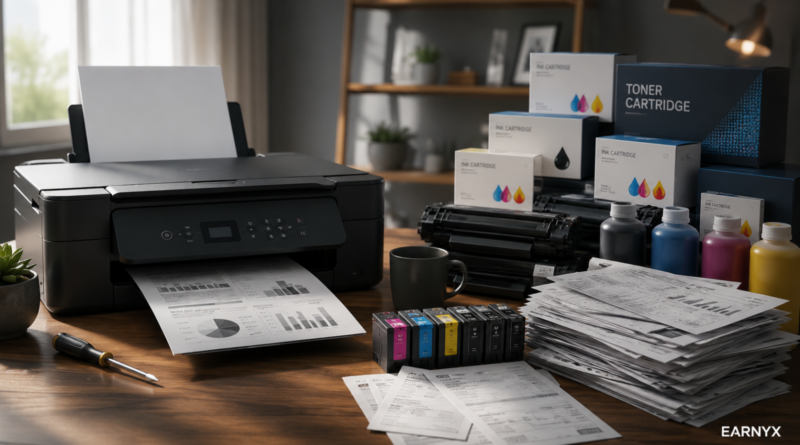
Printers are a classic example of why purchase price and ownership cost are different. The hardware may be inexpensive, while replacement ink or toner becomes the larger expense over the machine’s life.
For buyers, the useful comparison is therefore not simply printer A versus printer B. It is the total cost of producing the number and type of pages you expect to print.
02 What Changed?
Consumers can now choose among traditional cartridge inkjets, refillable ink-tank models, monochrome and color laser printers, and subscription-based ink programs. Those models shift costs between the initial purchase and ongoing supplies.
ENERGY STAR also maintains efficiency criteria for imaging equipment, adding electricity use to the ownership-cost picture, although consumables can be the much larger variable for many home users.
03 Why It Matters
A printer that is $100 cheaper upfront can lose that advantage after only a few replacement-cartridge cycles. Conversely, paying more for a high-volume machine makes little sense if you print only a handful of pages each month.
This is a concrete application of Earnyx’s broader total-cost approach and relates to why the cheapest option can cost more.
04 What It Means for You
Estimate your monthly black-and-white and color volume. Find the manufacturer’s stated cartridge or toner yield and replacement price, while remembering that real-world yield varies with page coverage and usage. Calculate approximate consumable cost per page, then multiply it by expected volume.
Add the hardware price, maintenance items and any subscription fees. If comparing models with substantially different power use, include electricity too.
05 Numbers + Context
Consider a hypothetical $100 printer using a $30 cartridge rated for 200 pages. The nominal ink cost is 15 cents per page. A $250 printer using a $25 supply rated for 1,000 pages has a nominal 2.5-cent supply cost per page. After 1,200 pages, the first setup totals about $280 for hardware and nominal ink, while the second totals about $280 as well. Beyond that rough break-even point, the higher-priced printer becomes cheaper under those assumptions.
Actual page yields depend on standardized test assumptions and individual printing patterns, so manufacturer figures should be treated as comparison inputs rather than guarantees.
06 Earnyx Takeaway
Buy a printer for your printing volume, not for the promotional hardware price. Light users should avoid overbuying capacity; frequent users should pay close attention to cost per page. The printer is a platform for years of consumable purchases, so the cheapest box on the shelf can easily become the expensive choice.
Sources: ENERGY STAR imaging-equipment guidance; manufacturer standardized page-yield specifications.