Takeout vs Dine-In Costs: Which Restaurant Option Is Better Value?
Table of Contents
01 Event
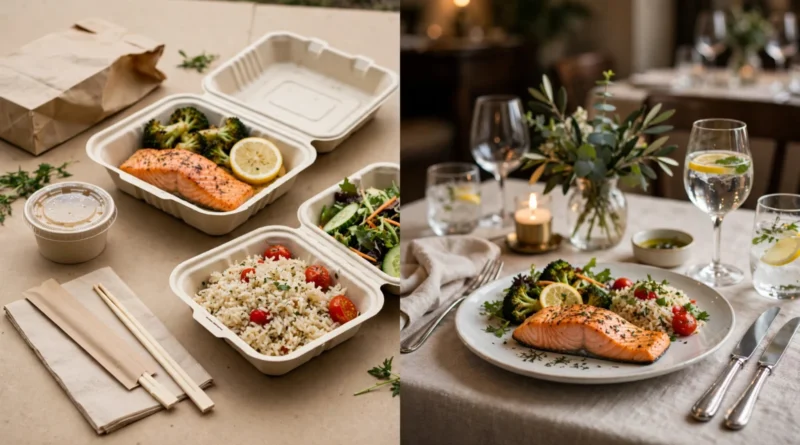
A restaurant meal can be consumed at a table or carried home, and the two choices can create very different spending patterns even when the food itself costs the same. Dine-in provides service and atmosphere; takeout trades some of that experience for convenience and greater control over extras.
02 What Changed?
Digital ordering and curbside pickup made takeout easier and more organized, while restaurants increasingly design menus to serve both off-premise and dine-in customers. Consumers can now choose the experience independently from the food more often than before.
The price comparison is not always straightforward. Menu prices may be identical, but dine-in can encourage spending on drinks, appetizers and desserts. Takeout may involve packaging charges, pickup transportation or different tipping expectations depending on the market.
03 Why It Matters
Restaurant spending is often shaped by context rather than entrée price. A $20 main course can become a $40-per-person evening after beverages, extras, tax and gratuity. The same entrée taken home may be paired with drinks and side dishes already in the kitchen.
But dine-in is also buying service, cleanup, atmosphere and social space. Comparing it with takeout solely as a food transaction ignores much of what the customer receives.
04 What It Means for You
Decide first whether your objective is the restaurant experience or simply the restaurant’s food. If you want an evening out, table service and atmosphere are part of the value. If you mainly want a particular meal, takeout may deliver most of the benefit at a lower total cost.
Compare your normal behavior rather than an artificially minimal bill. If you nearly always buy a drink when dining in, include it. If takeout means a dedicated 30-minute drive, include transportation and time. If you pick it up on the way home, the incremental cost may be tiny.
Household size matters. Avoiding several restaurant-priced beverages and add-ons can create larger savings for a family than for one diner.
05 Numbers + Context
Suppose two entrées cost $22 each, for $44. Dining in adds two $5 drinks and a $9 shared dessert, bringing the subtotal to $63 before tax and gratuity. A 20% gratuity on that subtotal would add $12.60. Takeout of the two entrées may remain near $44 plus any packaging charge and pickup cost, with tipping handled according to local custom.
The difference can easily exceed $20 for the same core food. Yet if the purpose was a date night or celebration, that extra spending may be purchasing the experience you actually wanted.
Another advantage of takeout is portion control after the purchase. Leftovers can move directly into the refrigerator instead of being forgotten at the table, potentially turning one restaurant order into another meal. Dine-in can offer the same opportunity, but only if leftovers are packed and actually eaten.
06 Earnyx Takeaway
Takeout usually gives consumers more control over the extras surrounding a restaurant meal, while dine-in delivers service and atmosphere that takeout cannot reproduce. The better value depends on what you are trying to buy. Use takeout when the food is the priority and dine in when the experience itself matters. That distinction makes restaurant spending more intentional without pretending every enjoyable meal must be optimized to the lowest possible cost.