New Car vs Used Car: Which Actually Costs Less?
Table of Contents
01 Event
Choosing between a new car and a used car looks simple until the full ownership cost enters the picture. A new vehicle usually gives you the latest safety features, a full factory warranty, predictable maintenance and access to promotional financing. A used vehicle usually lowers the purchase price and lets the first owner absorb part of the steepest depreciation. The better choice depends less on whether the odometer reads zero and more on how long you will keep the vehicle, how you finance it and how much repair risk you can comfortably absorb.
02 What Changed?
The comparison has become more important because buyers increasingly need to look beyond the advertised monthly payment. Financing can materially increase the total price of either a new or used vehicle, while depreciation can erase a large portion of a new car’s value during the first years. The Federal Trade Commission advises buyers to compare the vehicle price, down payment, APR, loan term and total financing cost rather than focusing only on the monthly payment. Used-car buyers also need to account for inspection findings and possible near-term repairs.
03 Why It Matters
A cheaper purchase price does not automatically mean a cheaper ownership experience. A used vehicle may require tires, brakes, a battery or other maintenance sooner. A new vehicle may avoid many of those early expenses but can lose value faster. That matters if you sell or trade after only a few years. Financing also changes the equation: a lower promotional rate on a new car can narrow the apparent price advantage of a used car financed at a higher APR.
04 What It Means for You
Start with your expected ownership period. If you tend to replace vehicles every three years, depreciation and resale value deserve heavy weight. If you keep cars for eight to ten years, buying new and spreading the initial depreciation across a long ownership period can be more reasonable. For used vehicles, pay for an independent inspection when practical and estimate upcoming maintenance rather than assuming the current sale price is the final cost. For new vehicles, compare the out-the-door price and financing separately so incentives do not hide an expensive purchase.
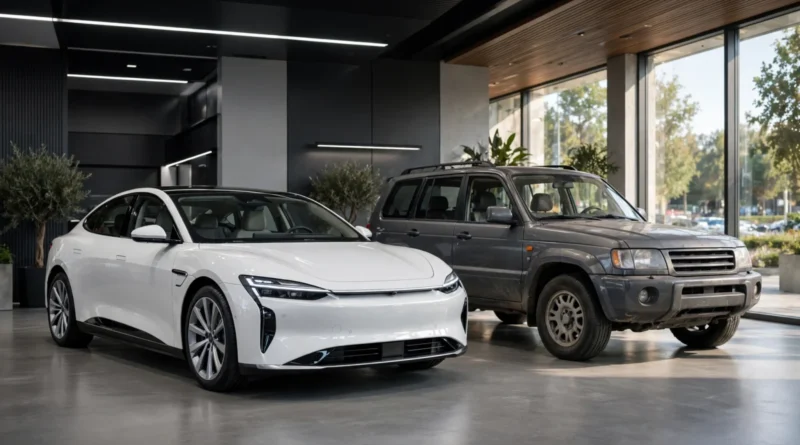
A strong comparison should put two realistic vehicles side by side: purchase price, taxes and fees, financing cost, expected depreciation, insurance, maintenance and likely repairs. Do not compare a basic used vehicle with a heavily optioned new model and conclude that age caused the entire price difference.
05 Numbers + Context
Depreciation is often the largest hidden difference. Experian reported in 2026 that many cars lose more than 10% of value in the first month and around 40% or more within five years, although results vary dramatically by model. Its cited iSeeCars analysis found an average five-year depreciation rate of 41.8% across more than 950,000 five-year-old used vehicles. On a hypothetical $40,000 new car, a 40% value decline represents $16,000 of lost value before fuel, insurance, maintenance or interest.
Financing deserves equal attention. The FTC notes that longer financing periods can make a monthly payment look easier while increasing the overall cost. Compare APR and total amount paid, not just whether the payment fits this month’s budget.
References: Federal Trade Commission — Buying a Used Car From a Dealer; Experian — What Is Car Depreciation?.
06 Earnyx Takeaway
Used cars often win on depreciation, while new cars can win on warranty protection, predictability and sometimes financing. The real mistake is choosing based on sticker price or monthly payment alone. Price the first five years of ownership, not just the day you drive away. If the used vehicle’s discount comfortably exceeds its added financing and repair risk, used can be the stronger value. If the gap is small and you plan to keep the car for many years, new can be more defensible than the headline price suggests.