
AI Model Drift Explained: Why the Same AI Product Can Behave Differently Over Time
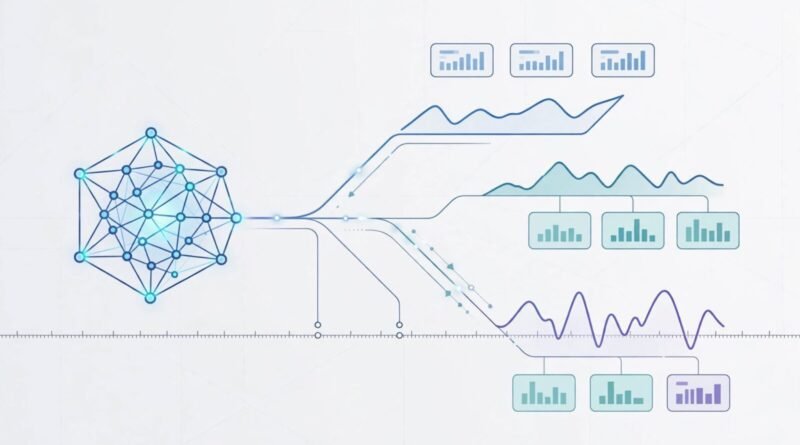
AI products can feel strangely inconsistent. A feature that worked well last month may suddenly answer differently, follow instructions less reliably, or become better at one task while getting worse at another. That does not always mean the underlying model is “broken.” It may be a form of model drift: a broad label for meaningful changes in how an AI system performs once the model, data, prompts, surrounding tools, or real-world inputs change over time.
Table of Contents
01 What It Is
In traditional machine learning, drift usually describes a change between the data a model learned from and the data it sees later in production. The world moves, customer behavior changes, language changes, fraud patterns evolve, or sensors begin producing different signals. A model trained on yesterday’s patterns can become less accurate even if its code has not changed.
Generative AI adds another layer. What users experience as “the model” is often a complete system: the foundation model, system instructions, retrieval sources, safety filters, tools, memory, routing logic and product interface. Any of those components can change. A provider may deploy a new model snapshot, adjust safety behavior, alter a prompt template, switch a request to a cheaper model, or update a retrieval pipeline. The user sees one product name, but the machinery behind that name may be moving.
02 How It Works
There are several ways drift can appear. Data drift happens when incoming information changes. Concept drift happens when the relationship between inputs and correct outputs changes. Model or system drift can occur when the model itself, its configuration, or the software around it changes.
For generative AI, another important source is nondeterminism. Many language models sample from multiple plausible next tokens, so identical prompts can produce different wording even when the system has not changed. That normal variation should not automatically be called drift. The stronger signal is a persistent shift in measurable behavior: lower task accuracy, more refusals, different formatting, higher latency, worse tool use, or a change in cost per completed task.
This is why serious AI deployments use evaluations rather than relying on memory or anecdote. A stable test set can be rerun whenever a model, prompt, tool or data source changes. The goal is not to force identical wording; it is to determine whether the system still meets the required quality, safety and reliability thresholds.
03 Why It Matters
Model drift matters because businesses increasingly build workflows around AI behavior. If a support bot starts classifying tickets differently, a coding assistant changes how it formats patches, or an extraction system stops returning a required field, downstream automation can fail even though the AI service remains online.
The risk becomes larger when AI can take actions. Earnyx previously looked at AI agents that can send emails and make payments. Once software is allowed to act instead of merely suggest, a small behavioral shift can have real operational consequences. The standard for “good enough” should therefore be higher for action-taking systems than for casual chat.
Drift also complicates vendor comparisons. A benchmark result describes a model at a particular point in time under a particular test. It does not guarantee that the consumer-facing product will behave identically months later, especially if the provider silently changes model routing or product settings.
04 What It Means for You
For everyday users, the practical lesson is simple: do not assume an AI product is permanently fixed after you have tested it once. If you depend on it for work, periodically retest the tasks that actually matter to you.
For a small business, that could mean keeping 20 to 50 representative prompts covering customer support, summarization, document extraction and writing. For a developer, it can mean automated evals that run before a model version or prompt change goes live. For a team using an AI agent, it should also include permission tests: what the system is allowed to read, change, send or purchase.
Version pinning can help when providers expose fixed model versions, but it does not solve every problem. External tools, APIs, retrieved documents and user behavior can still change. The more components an AI workflow depends on, the more places there are for performance to drift.
05 Numbers + Context
There is no universal “acceptable drift percentage.” The threshold depends on the task. A creative writing assistant can tolerate substantial variation. A system extracting invoice totals, classifying compliance documents or triggering payments may require near-perfect adherence to a schema and strict human review when confidence is low.
The useful numbers are therefore your own baseline metrics: task success rate, factual error rate, schema-valid output rate, latency, cost per successful task and human escalation rate. Tracking those over time is more meaningful than asking whether a model simply “feels worse.”
The broader AI market is also moving quickly. Companies are spending heavily on models and infrastructure, while simultaneously looking for ways to control those costs. Earnyx has covered how business AI spending is beginning to meet tighter budget scrutiny. That pressure creates incentives for model switching and routing, which makes continuous evaluation even more important.
06 Earnyx Takeaway
AI model drift is not one mysterious failure mode. It is the practical result of changing data, changing models, changing system components and normal probabilistic variation. The important question is not whether an AI answer looks different from last month. It is whether the system still performs the job you depend on at an acceptable level of accuracy, cost and risk.
The best defense is boring but effective: keep representative tests, measure outcomes, document important changes and retest after every meaningful update. AI products will continue to evolve. Your evaluation process needs to evolve with them.