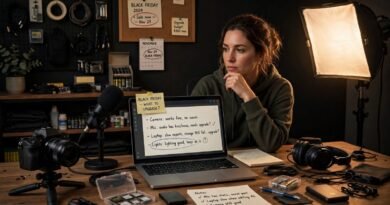

YouTube Sponsor Revisions: How Many Changes Should Be Included Before Charging Extra?
Sponsor revisions can turn a profitable YouTube brand deal into an unprofitable production project. A creator may price the campaign for one script, one shoot, and one edit, then discover that the brand expects repeated rewrites, new product shots, legal changes, and fresh exports after every review round.
The safest approach is to define a limited revision allowance in the contract and charge separately when the brand requests changes beyond that scope.
Table of Contents
Not all revisions are equal
Fixing a misspelled product name takes minutes. Rewriting the sponsor segment, reshooting footage, changing the video structure, or replacing a claim after final approval can take hours.
Creators should distinguish between minor edits and material revisions instead of counting every change as one identical “round.”
A practical revision policy
A simple sponsorship package can include one or two consolidated revision rounds. The brand submits all requested changes at once, the creator makes them, and additional rounds are billed separately.
This encourages the sponsor’s marketing, legal, and agency teams to coordinate internally instead of sending conflicting feedback across multiple days.
Define what counts as included
The contract can specify that included revisions cover changes to sponsor messaging, graphics, captions, or links that do not require a reshoot or major structural rewrite.
Reshoots, new concepts, additional deliverables, changes after approval, or changes caused by late sponsor information can be treated as out-of-scope work.
Price creator time, not frustration
A useful extra-revision fee can be based on the expected labor:
Extra revision fee = estimated additional hours × creator production rate + contractor costs
If a revision requires two hours of editing plus a freelance editor charge, both costs belong in the fee.
Our Earnyx guide on YouTube channel economics applies directly: unpaid revision time is still a real production expense.
Example: two revision rounds versus six
Imagine a $4,000 sponsorship expected to take 10 hours. The effective gross revenue is $400 per planned hour before overhead. Then the brand adds six hours of revisions. The project’s effective rate falls to $250 per hour.
If the creator had charged an additional $750 for the extra work, the campaign would better reflect the actual production burden.
Late legal changes need special treatment
Brands sometimes send legal or compliance changes after the creator has filmed. If the creator followed the approved brief, a late change should not automatically become free labor.
The contract can state that material changes requested after script or concept approval may trigger additional fees, especially when they require reshooting.
Creator mistakes are different
If the creator ignored the approved talking points, pronounced the brand incorrectly, used the wrong link, or failed to deliver agreed requirements, correcting those errors generally belongs to the original obligation.
A fair revision policy separates sponsor-driven scope changes from fixes required because the creator did not deliver the contract.
Approval milestones reduce revision risk
Creators can use checkpoints such as concept approval, sponsor-script approval, rough-cut review, and final approval. Once the sponsor signs off on an earlier stage, changing it later can be treated as a new request.
This is especially important for dedicated sponsored videos where a late script change can affect the entire upload.
Do not allow unlimited revisions by default
“Unlimited revisions” can create an open-ended production obligation. Even a cooperative sponsor can have multiple internal stakeholders who keep changing direction.
Creators should either remove unlimited-revision language or price it high enough to compensate for the uncertainty.
Revision deadlines matter too
A creator may reserve time for sponsor feedback, but if the brand responds days late, publication schedules can break. Contracts can define review windows and explain that late feedback may move the publish date.
This prevents the creator from being responsible for delays caused by the sponsor’s approval process.
Disclosure and accuracy can require legitimate corrections
YouTube requires creators to flag paid promotion, and advertising claims should be accurate. See YouTube’s paid promotion guidance. For U.S.-relevant endorsements, FTC guidance also expects truthful endorsements and clear disclosure.
If a requested revision is necessary to correct a false or unsupported claim, creators should treat accuracy seriously even when discussing who pays for the extra work.
Create a revision rate card
Creators can simplify negotiations with standard add-ons: one extra minor revision round, reshoot fee, rush revision fee, additional platform cutdown, or new deliverable fee.
This gives the brand predictable options and makes it easier for the creator to protect production margin.
Bottom line
One or two consolidated revision rounds are often a workable starting point for YouTube sponsorships, but there is no universal number every deal should include. The key is to define scope before production begins.
Charge extra when the sponsor changes approved material, requests additional rounds, adds deliverables, or requires reshoots that were not caused by creator error. Revision limits are not about being difficult—they keep the sponsorship priced according to the work actually required.