Basement Waterproofing: How to Compare Drainage, Sump Pumps, Exterior Work, and Real Causes
“Basement waterproofing” can describe everything from sealing a small wall crack to installing interior drainage, sump pumps, exterior excavation, membranes, grading, or foundation repairs. That makes headline prices almost meaningless until the source of the water is identified.
The right financial decision starts with diagnosis: where is the water coming from, under what conditions does it appear, and which repair addresses that pathway?
Table of Contents
Water can enter in several ways
Common sources include surface runoff, overflowing gutters, short downspouts, poor grading, foundation cracks, hydrostatic pressure, plumbing leaks, window wells, wall penetrations, and condensation.
A waterproofing proposal should explain which mechanism is causing the observed problem.
Start outside before assuming major interior work
Roof runoff and grading can direct large amounts of water toward the foundation. Extending downspouts, repairing gutters, correcting negative grade, or improving drainage can sometimes solve part of the problem at much lower cost.
That does not eliminate every basement-water problem, but it should be evaluated before expensive interior systems are treated as the only option.
Interior drainage manages water rather than stopping it outside
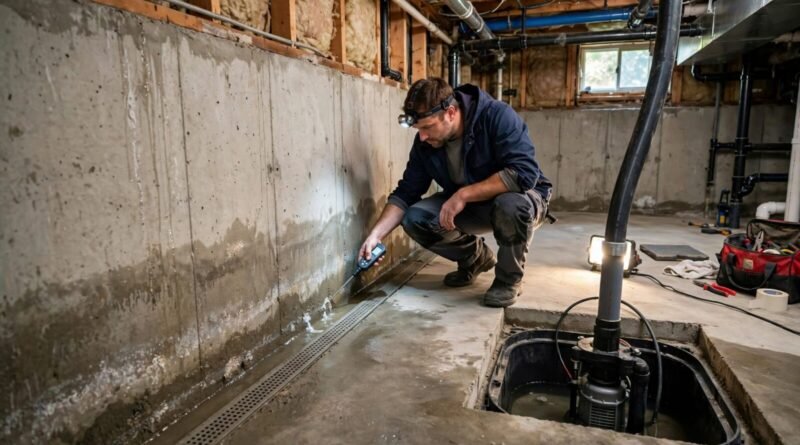
Interior perimeter drains can collect water that reaches the foundation and route it to a sump basin. This can be effective, especially where exterior excavation is impractical.
Understand that this is a water-management strategy. It does not necessarily stop water from reaching the exterior side of the foundation.
Exterior waterproofing can be more invasive
Exterior excavation may involve digging to the foundation, repairing cracks, adding drainage or waterproofing materials, and restoring landscaping, decks, patios, or walkways.
Access and restoration can dominate the cost, so a quote should define exactly what is disturbed and restored.
Sump pumps add equipment and maintenance
A sump system can reduce water accumulation, but pumps can fail, clog, lose power, or need replacement.
Where the pump is critical, backup pumps, battery systems, alarms, and generator capacity can be part of the ownership cost.
A hypothetical comparison
Suppose Contractor A quotes $3,000 for crack injection and downspout work. Contractor B quotes $12,000 for a full interior perimeter drain and sump system.
If the water enters through one isolated wall crack during heavy runoff, the smaller scope may solve the documented problem. If hydrostatic pressure is causing widespread floor-wall seepage, the larger system may be more appropriate.
These figures are illustrative.
Wall coatings are not a universal solution
Interior masonry coatings can reduce minor dampness in some conditions but may fail when significant water pressure, cracks, or exterior drainage problems remain.
Do not confuse a cosmetic coating with a complete drainage strategy.
Foundation cracks need context
Some cracks are primarily water pathways; others may indicate structural movement. Width, pattern, displacement, and change over time matter.
When structural movement is suspected, a qualified engineer or structural professional can be more appropriate than a waterproofing salesperson alone.
Window wells can be overlooked
Clogged drains, missing covers where appropriate, poor grading, or low well walls can allow water to enter basement windows.
Inspect these before assuming the foundation wall itself has failed.
Condensation can mimic leakage
Warm humid air contacting cool basement surfaces can produce condensation that looks like seepage.
Moisture measurements, weather patterns, and inspection can help separate groundwater from indoor humidity.
Mold means the moisture source must be fixed
The EPA’s mold guidance emphasizes controlling moisture as the key to preventing mold growth.
Removing mold without fixing the water problem is not a complete repair.
Insurance depends on the cause of water
Homeowners insurance can treat plumbing leaks, surface flooding, groundwater seepage, sewer backup, and maintenance problems differently.
Earnyx’s insurance exclusions guide explains why the water source matters before assuming coverage.
Normalize waterproofing bids
Compare:
- diagnosed water source;
- exterior drainage work;
- crack repair;
- interior drains;
- sump pumps and backups;
- membranes;
- excavation;
- electrical work;
- permits;
- finish restoration;
- landscaping restoration;
- and warranty.
Warranties need details
Ask what conditions the warranty covers, whether annual maintenance is required, whether it transfers to a new owner, and what happens if water enters from a source outside the installed system.
Bottom line
Basement waterproofing cost is determined by the path the water takes and the method required to control it.
Start with gutters, grading, drainage, cracks, and plumbing; distinguish condensation from groundwater; and compare scopes by the problem they actually solve. The most expensive waterproofing system is poor value if it is aimed at the wrong source of moisture.