Does a Larger Appliance Always Cost More to Run?
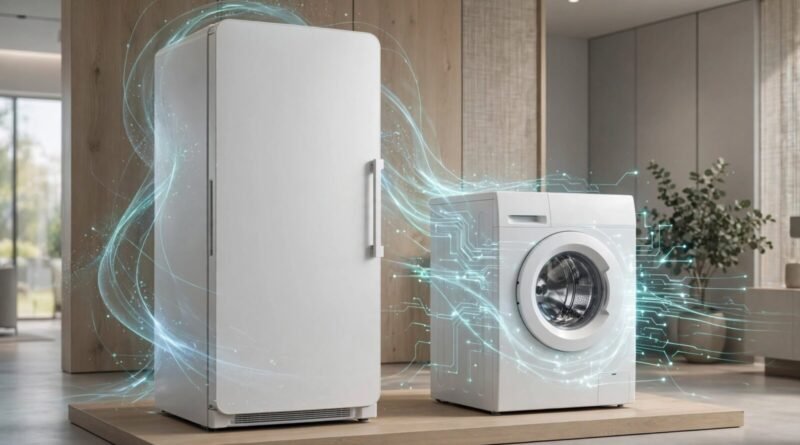
A bigger refrigerator, television, air conditioner or washing machine can require more energy than a smaller equivalent, but size alone does not tell you what it will cost to operate. Appliances convert and use energy in different ways, and efficiency improvements can be large enough that a newer larger model consumes less than an older smaller one. The useful comparison is measured energy use for the specific product and workload, not dimensions alone.
Table of Contents
Operating cost starts with consumption
Electricity cost is based on kilowatt-hours, not physical size. To estimate annual cost, multiply expected energy consumption by the price you pay per kilowatt-hour. For gas appliances, use the corresponding fuel consumption and local rate. The U.S. Department of Energy provides a method for estimating appliance and home-electronics energy use from wattage and operating time.
That calculation immediately shows why a large device used rarely can cost less annually than a small device running continuously.
Efficiency can outweigh size
Two refrigerators with similar capacity can have different annual energy ratings because insulation, compressors, controls and defrost systems differ. Likewise, a high-efficiency heat pump can deliver heating or cooling differently from older equipment even when serving a larger space.
Standardized energy labels are valuable because they compare consumption under defined test conditions. Use them to compare models within the category rather than assuming the smallest product must be cheapest.
Capacity can sometimes reduce the number of cycles
A larger washing machine may use more resources per cycle, but if it allows a household to wash the same weekly laundry in fewer properly loaded cycles, the annual difference may be smaller than expected. Conversely, repeatedly running an oversized machine with tiny loads can waste capacity.
The same principle applies to cooking. A large oven may be inefficient for reheating one portion, while it can be reasonable when cooking several dishes together.
Standby and controls matter
Connected displays, quick-start modes and network features can consume energy even when the primary function is inactive. Those loads are usually much smaller than full operation but can accumulate over time. Compare total energy information rather than only maximum wattage.
Power-management settings can reduce unnecessary consumption without changing appliance size.
Local prices change the bill
The same appliance can cost different amounts to run in different places because electricity and fuel tariffs vary. Time-of-use rates can further change cost depending on when energy is consumed. A universal dollar figure therefore cannot be attached to a particular appliance size.
Use your own utility rate for a realistic estimate and account for fixed charges separately, because those may not change with appliance consumption.
Oversizing can create other problems
For heating and cooling equipment, bigger is not automatically better. HVAC systems should be sized for the building load. Oversized equipment can cycle differently, affect comfort and humidity control, and cost more upfront. Professional sizing is more useful than selecting the largest unit available.
Refrigerators and freezers also need appropriate ventilation clearance; cramming a larger unit into a poorly ventilated space can hurt performance.
Purchase price versus lifetime cost
A larger efficient appliance may cost more to buy but less to operate than an inefficient alternative. Whether that premium pays back depends on usage, lifespan and energy prices. Conversely, paying extra for efficiency on an appliance used only occasionally may yield a long payback period.
Evaluate purchase cost and expected operating cost together rather than treating either as the whole decision.
Earnyx takeaway
Larger appliances do not always cost more to run. Size can influence energy demand, but efficiency, technology, settings, usage time, load size and local rates determine the actual bill. A smaller inefficient appliance running constantly can consume more than a larger efficient appliance used sensibly.
Compare standardized energy information for the exact models, then calculate expected annual cost using your own usage and utility rates. Browse more household cost fact checks in Earnyx Everyday Myths.
Sources
U.S. Department of Energy — Estimating Appliance and Home Electronic Energy Use; ENERGY STAR — Products.