
Archaeologists May Have Found Part of Ancient Rome’s Firefighting Headquarters
Table of Contents
01 Event
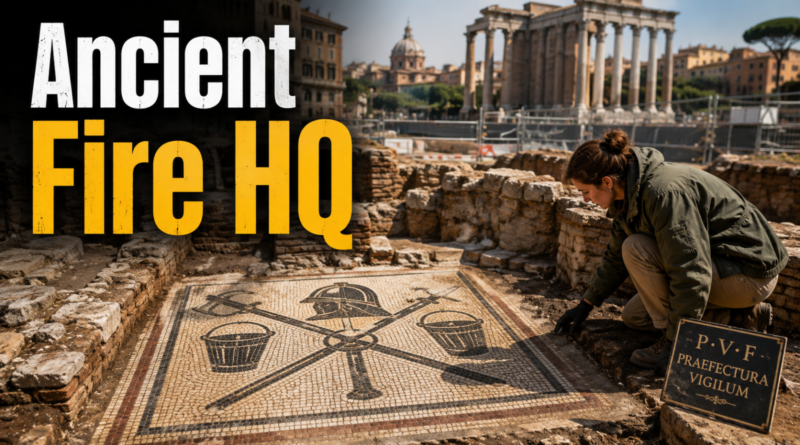
Restoration work at Villa Celimontana in Rome has exposed a roughly 2,000-year-old building with decorated rooms, mosaics and inscriptions that may be connected to the vigiles, ancient Rome’s firefighting and night-watch corps. Source: Popular Mechanics.
02 What Changed?
The structure was not uncovered during a search for a fire station. It appeared while crews were stabilizing a retaining wall. Archaeologists have excavated several rooms with painted plaster, marble decoration and mosaics, including imagery that researchers say resembles material associated with known vigiles sites.
03 Why It Matters
Fire was a constant threat in densely built ancient Rome. The vigiles, organized under Augustus, were among the city’s most important public-safety institutions. A newly identified headquarters or barracks could reveal how these units lived, worked and were integrated into the city.
04 What It Means for You
The discovery is a reminder that modern Rome still sits directly on top of layers of earlier urban life. Routine infrastructure work can uncover evidence that fills gaps in how researchers understand public services two millennia ago.
05 Numbers + Context
The building appears to date to around the second century C.E. Eight rooms have been identified, with five excavated in detail so far. Archaeologists are comparing mosaics and inscribed statue bases with evidence from confirmed vigiles facilities, including barracks at Ostia.
06 Earnyx Takeaway
This is not yet a confirmed ancient fire station, and that uncertainty matters. But if the interpretation holds, a maintenance project will have uncovered something surprisingly modern in spirit: part of the infrastructure Romans built to protect a crowded city from fire.