
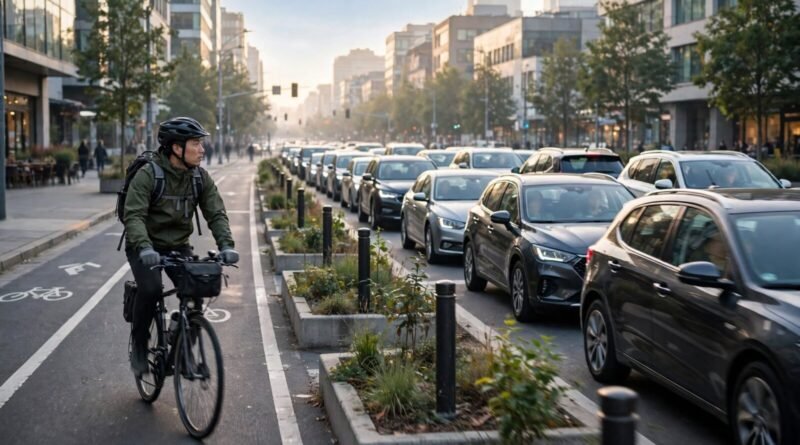
Bike Commuting vs Driving: How Much Can a Bicycle Save Over a Year?
Cycling to work can reduce fuel, parking and transit costs, but the bicycle itself is not free to operate. A realistic comparison includes the bike, safety equipment, maintenance, replacement parts, secure parking and the time required for the trip.
Table of Contents
01 Event
For workers who live within a practical riding distance, a bicycle can replace some or all motorized commuting. The financial case is strongest when the alternative involves expensive parking, frequent transit fares or high vehicle mileage.
02 What Changed?
E-bikes have expanded the range of trips that some commuters can reasonably cycle, while improved cycling infrastructure in some cities has made bike commuting more practical. But costs vary widely by bicycle type, local conditions and storage needs.
The U.S. Department of Transportation and local transportation agencies emphasize safe cycling practices and infrastructure. A commuting budget should not cut essential safety equipment merely to make the bicycle option appear cheaper.
03 Why It Matters
The biggest mistake is comparing only fuel with a bicycle’s purchase price. A driver who already owns a car may still pay insurance and registration after switching some trips to a bike. The savings are primarily the costs avoided by each trip unless cycling allows the household to eliminate a vehicle entirely.
Bicycle maintenance is also real. Tires, tubes, chains, brake components and periodic service wear with distance and conditions.
04 What It Means for You
Estimate the annual cost of the bicycle over the period you expect to use it. Add essential equipment such as lights, lock, helmet where appropriate, rain gear and storage. Then add a realistic maintenance allowance based on your bike and mileage.
Compare that with the costs you will actually avoid: fuel, parking, tolls, transit fares or ride-hailing. Do not count fixed car expenses as savings unless the vehicle is genuinely removed from the household.
Test the route for safety, hills, weather exposure and secure parking before assuming you can ride every workday.
For another commute-cost comparison, Earnyx’s public transit commute-time guide shows how to compare dollars saved with extra travel time.
05 Numbers + Context
A useful calculation is:
Annual cycling cost = annualized bike purchase + equipment + maintenance + secure storage + backup transport
Annual commute saving = avoided driving or transit costs − annual cycling cost
Suppose a commuter spends $900 on a bicycle and expects to use it for five years. Ignoring resale value, the annualized purchase cost is $180. If equipment and maintenance add $220 per year, the modeled annual cycling cost is $400 before backup transportation. If the rider avoids $1,200 of parking, fuel and transit expenses, the net modeled saving is $800. These are illustrative numbers, not typical market prices.
06 Earnyx Takeaway
Cycling can be a low-cost commute, but only after the full bicycle budget is included. The strongest savings usually come from avoiding parking and frequent motorized trips, not from pretending the bike has no operating cost.
Use realistic riding days, include maintenance and keep a backup plan for weather or mechanical problems. If cycling lets a household avoid owning an additional vehicle, the potential savings can become much larger.
The purchase price should be spread across expected useful years rather than charged entirely to the first commuting month. This makes it easier to compare cycling with recurring transit or driving expenses.
Maintenance depends on mileage, weather, road conditions and equipment. A commuter riding through rain and winter grime may replace drivetrain and brake parts more frequently than a fair-weather rider. Track actual maintenance after the first year and update the budget.
Secure storage can determine whether cycling is practical. A strong lock may be enough in one workplace, while another commuter may need paid bike parking or indoor storage. Theft risk belongs in the planning process because replacing a bicycle can erase months of savings.
Clothing and hygiene can add costs. Some riders need rain gear, a change of clothes or access to showers. Others can commute in normal clothing. The relevant budget is the equipment your route and workplace actually require.
Time should be compared door to door. A bicycle may be slower than driving on an open road but faster after parking, walking and traffic are included. On short urban trips, the time difference can be surprisingly small.
Weather reduces usable days in some climates. If the commuter expects to ride only 120 workdays rather than 220, the savings calculation should use 120. Overestimating riding frequency makes the bike appear to pay back faster than it really will.
E-bikes add battery and electrical-system considerations but can make longer or hillier commutes practical. Compare charging, eventual battery replacement and service availability with the additional trips the electric assistance allows you to replace.
Health benefits may be meaningful, but they should not be converted into guaranteed medical savings. Treat improved activity as a separate personal benefit rather than inventing a dollar value.
A hybrid commute can be optimal. Cycling two or three days a week may capture much of the parking or fuel saving while preserving flexibility for bad weather, errands and appointments.
The Earnyx method is to compare annualized equipment and maintenance with the expenses actually avoided. If the bicycle is used consistently and replaces expensive commuting trips, the economics can be strong even after realistic ownership costs are included.

Pingback: Bike Share vs Owning a Bicycle: Which Costs Less?