
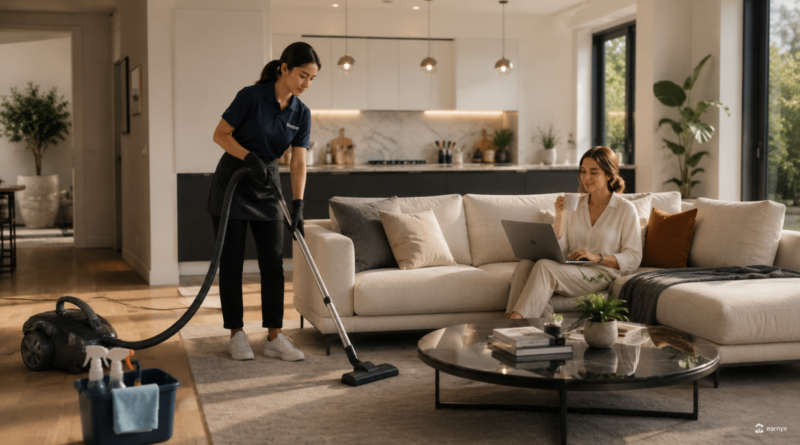
Cleaning Service vs DIY Cleaning: How Much Is Buying Back Your Time Worth?
Table of Contents
01 Event
Hiring a cleaning service is one of the clearest examples of exchanging money for time. The alternative looks free because you do not receive an invoice, but DIY cleaning still consumes hours that could be used for work, family, rest or something else you value.
02 What Changed?
The important shift is to stop comparing a professional cleaning bill with $0. Your own labor has an opportunity cost even when nobody pays you for those hours.
Recent U.S. time-use data make the scale visible. The Bureau of Labor Statistics reported that people averaged about 1.99 hours per day on household activities in 2025. Interior cleaning alone averaged 0.33 hours per day across the population, while people who actually performed housework on a given day naturally spent much longer.
03 Why It Matters
A recurring cleaning service can become a meaningful annual expense, so convenience alone is not enough reason to hire one. But looking only at the invoice ignores what the service replaces.
If a professional team completes in two hours what takes you four or five hours, the purchase is not simply “a clean house.” You are also buying back part of a day.
04 What It Means for You
Estimate how many hours you personally spend on the work a cleaner would actually replace. Do not count tasks the service will not perform.
Then divide the cleaning price by the hours you recover. A $120 visit that saves four hours costs $30 per hour recovered. A $180 visit that saves three hours costs $60 per hour recovered.
That number can be compared with your after-tax earning potential, the cost of other services you use to save time, or simply what you are willing to pay for free time. You do not have to earn money during the recovered hours for them to have value.
Professional cleaning tends to make more sense when your schedule is constrained, cleaning repeatedly consumes weekends, physical limitations make the work difficult, or outsourcing prevents household stress. DIY is usually stronger when money is tight, you have available time, the home is easy to maintain, or you genuinely do not mind the work.
05 Numbers + Context
BLS data for 2025 show an average of 1.99 hours per day across all household activities. Interior cleaning averaged 0.33 hours, food preparation and cleanup 0.71 hours, and laundry 0.17 hours. These are population-wide averages, not a recommended cleaning schedule, but they demonstrate how quickly unpaid household labor accumulates.
A useful calculation is:
Effective cost per hour recovered = cleaning-service cost ÷ DIY hours avoided.
If a $140 service saves five hours, the effective price is $28 per recovered hour. If the same service only replaces two hours of your own work, it is $70 per hour.
06 Earnyx Takeaway
A cleaning service is worth evaluating like any other productivity purchase. The right question is not whether you can clean your own home. Of course you can. The question is whether the hours required are more valuable to you than the price of outsourcing them.
Track one or two real cleaning sessions before deciding. Once you know how much time you actually spend, the decision becomes much clearer—and far less emotional.



Pingback: Wash-and-Fold Laundry vs DIY: Is the Time Saving Worth It?