
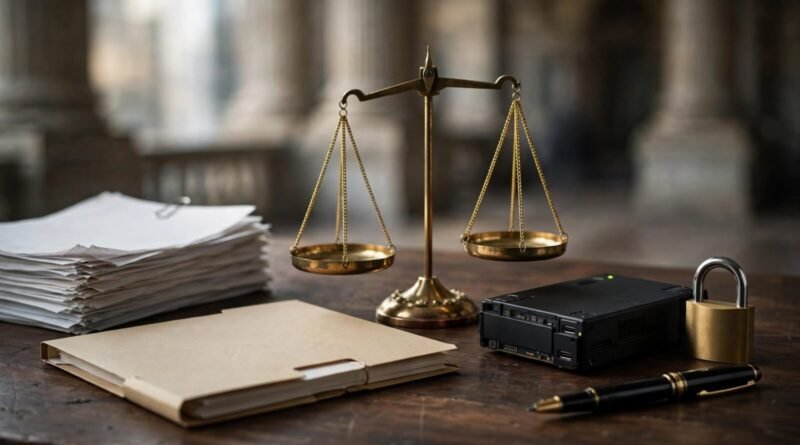
Judge Blocks Pentagon Blacklisting of Anthropic in Major AI Government-Contracting Fight
Table of Contents
01 Event
A U.S. federal judge has struck down the Pentagon’s blacklisting of Anthropic as a supply-chain risk, ruling that the government’s action was unlawful and violated the AI company’s constitutional rights. U.S. District Judge Rita Lin issued a 59-page decision rejecting the government’s justification for the designation.
The dispute grew from Anthropic’s conflict with the Trump administration over how military agencies could use its AI models. Anthropic argued that the blacklist could cost it billions of dollars in business and damage its reputation with commercial customers.
Reuters video: U.S. judge blocks the Pentagon’s Anthropic blacklisting.
02 What Changed?
The ruling removes a major legal barrier that threatened Anthropic’s ability to participate in government and contractor supply chains. A supply-chain-risk designation can have effects far beyond one agency because contractors may avoid a company if using its products could jeopardize federal work.
The decision also draws a boundary around national-security authority. Judge Lin wrote that invoking national security does not give the government unlimited power to retaliate against critics. That principle could matter in future disputes between technology companies and federal agencies.
03 Why It Matters
Artificial intelligence is becoming embedded in defense, intelligence, logistics and cybersecurity. The companies building frontier models therefore face a difficult balance: government contracts can be enormously valuable, but military customers may want uses that conflict with a company’s internal safety policies.
If governments can exclude AI suppliers whenever those companies resist certain applications, firms may face pressure to weaken their safeguards. If suppliers can dictate every government use, agencies may argue that national-security missions are constrained. Courts are increasingly being asked to define where those powers meet.
The ruling also matters to investors because government access can influence a technology company’s addressable market and credibility.
04 What It Means for You
Most consumers will not feel an immediate effect, but businesses using Anthropic should pay attention to whether the decision reduces uncertainty around government-related customers. Companies working as federal contractors should still review procurement rules rather than assuming the court decision automatically clears every use case.
For AI buyers, the case is a reminder to understand vendor policies. A model provider can change terms, governments can impose restrictions and legal disputes can affect availability. Critical systems should have contingency plans rather than relying on a single model vendor.
For workers in regulated industries, the issue also shows that AI procurement is becoming a governance question, not merely a software decision.
05 Numbers + Context
The ruling runs 59 pages and follows months of conflict between Anthropic and the administration. Anthropic argued that the designation could cost billions in lost business and reputational damage. The precise commercial impact will depend on how the government responds and whether it appeals.
The case arrives as Anthropic is preparing for a potential IPO, increasing the importance of resolving legal risks that could affect future investors.
Related Earnyx coverage: Read how AI is increasingly tied to defense policy and how governments are expanding technology-driven defense capabilities.
06 Earnyx Takeaway
The most important part of the ruling is not which company won. It is that AI safety policies, government procurement and constitutional limits are colliding as AI becomes strategically important.
For businesses, vendor concentration is the practical risk. If an AI product becomes central to operations, document how data and workflows could move to another provider if regulation, litigation or policy suddenly limits access.
For investors, government relationships can be both an opportunity and a liability. Large contracts create revenue, but dependence on political decisions introduces risks that ordinary software companies may not face at the same scale.
The procurement implications extend beyond Anthropic. Government agencies increasingly depend on commercial AI rather than building every model internally. That creates a market where policy disagreements can affect vendors that also serve banks, healthcare companies and software developers. A designation intended for federal procurement can therefore spill into private purchasing decisions because corporate risk teams often treat government sanctions as a warning signal.
Companies selling to government should understand that contract value is only one side of the relationship. Compliance obligations, security reviews, data restrictions and acceptable-use disputes can influence product design for every customer. A vendor may decide that a lucrative contract is not worth changing core safety policies; another may design a separate government product.
The court’s decision does not eliminate national-security oversight. Agencies still have broad authority to protect sensitive systems and choose suppliers. The ruling instead challenges the specific process and justification used against Anthropic. Future government actions may be structured differently to survive judicial review.
For procurement teams, this is another reason to avoid a single-model architecture. Applications can often be designed with an abstraction layer that allows different models to perform the same task. That may require additional engineering upfront, but it reduces disruption if one vendor becomes unavailable because of law, policy or commercial disagreement.
Anthropic’s potential IPO adds another layer. Public investors will want to know whether government conflict can materially affect revenue and whether the company’s safety positions limit access to major markets. The company will also need to explain how it balances mission commitments with shareholder expectations.
The broader question is likely to recur. As AI systems become capable of cyber operations, intelligence analysis and autonomous decision support, governments will demand access while model companies try to define boundaries. Courts, procurement rules and contracts will increasingly determine where those boundaries sit.
For taxpayers, competition among multiple qualified AI suppliers can also matter. If policy disputes leave agencies dependent on fewer vendors, government may lose negotiating leverage on price and capability. A transparent procurement framework is therefore valuable for both security and cost control.
That competition can help prevent both excessive prices and technological dependence.
Sources: Axios and agency reporting on the August 27-28, 2026 federal court ruling involving Anthropic and the Pentagon.