Solar Panel Efficiency: When Paying More for Higher Efficiency Is Actually Worth It
Solar panel efficiency tells you how much of the sunlight reaching a module is converted into electricity. Higher efficiency can be valuable, but it does not automatically make a solar system a better financial deal. The premium is easiest to justify when usable roof space is limited or when higher-output modules solve a specific design constraint.
Table of Contents
01 Event
Residential solar buyers can choose among modules with different efficiency ratings, power outputs, warranties and prices. Premium products often promise more power from the same roof area, while lower-cost modules may produce similar total energy if there is enough space to install more of them.
02 What Changed?
Module efficiency has improved over time, giving installers more design flexibility. But homeowners still pay for a complete system, not an efficiency percentage. Racking, wiring, inverters, labor, permitting and roof conditions all affect installed cost and production.
The U.S. Department of Energy explains that solar-cell and module efficiency are important performance characteristics, while NREL provides standardized research and efficiency records. Those resources are useful for understanding technology, but a household purchase still needs to be evaluated at the system level.
03 Why It Matters
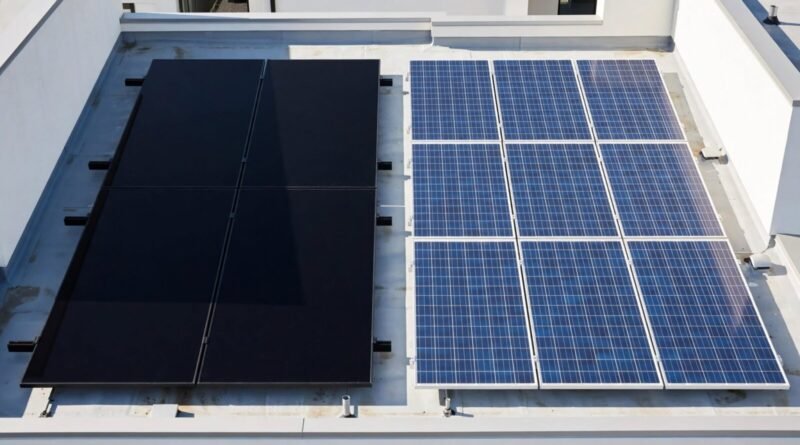
If roof area is abundant, a lower-efficiency panel may be financially competitive because the installer can use more modules to reach the desired system size. If the roof has only a small unshaded area, higher efficiency can allow more generating capacity to fit into that limited space.
Efficiency also should not be confused with annual energy yield. Temperature, orientation, shading, inverter clipping, degradation and local weather influence how much electricity the system actually produces.
04 What It Means for You
Ask installers to quote complete systems that target the same annual energy production where possible. Compare installed price, projected first-year generation, degradation assumptions, warranties and equipment—not just panel efficiency.
Calculate the premium per additional kilowatt-hour of expected lifetime generation. If a higher-efficiency system costs substantially more but produces only a small amount of additional useful energy, the premium may not pay back.
Roof constraints deserve special attention. Chimneys, vents, setbacks and shade can reduce usable area. In those cases, fitting more watts into each square meter may have real economic value.
For long-term output considerations, Earnyx’s solar panel degradation guide explains how gradual performance loss can affect lifetime production.
05 Numbers + Context
Use the actual proposals. A simple comparison is:
Efficiency premium = installed cost of higher-efficiency system − installed cost of comparable alternative
Value of extra production = additional lifetime usable kWh × expected value per kWh
Suppose two systems fit on the same constrained roof. One costs $1,500 more and is projected to generate 350 additional useful kilowatt-hours per year. The financial question is whether the lifetime value of that additional production, after degradation and other assumptions, exceeds the $1,500 premium. Those numbers are an illustration, not a market-price claim.
If both systems can already meet the household’s economically useful target, paying more for extra efficiency may deliver little additional value.
06 Earnyx Takeaway
Higher-efficiency solar panels are most valuable when roof space is the limiting resource. When space is plentiful, the better deal may be the system that produces the required electricity at the lower total installed cost.
Compare complete proposals, not isolated panel specifications. The decision should include price, expected energy, degradation, warranty, roof layout and the value of the electricity produced.
Efficiency is a tool for solving a design problem. Pay a premium when it buys useful generation you could not obtain more cheaply another way.
Panel wattage and efficiency are related but not identical decision inputs. A high-wattage module may simply be physically larger, while a high-efficiency module produces more power per unit of area. Roof-constrained buyers should compare watts per usable roof area, not only the number printed on the panel label.
Heat performance can also matter. Solar modules are rated under standardized conditions, while real roofs can become much hotter. Temperature coefficients describe how output changes as cell temperature rises. Two panels with similar efficiency ratings can therefore perform differently in hot conditions.
System design may limit the value of extra module power. Inverter sizing, orientation and clipping can affect how much of the additional DC capacity becomes usable AC energy. Ask the installer to model the complete system rather than multiplying panel wattage by the number of modules.
Warranty quality deserves separate attention. A strong performance warranty establishes a minimum output threshold over time, while a product warranty addresses defects. Service availability and labor coverage can matter as much as the headline warranty period.
Higher efficiency can also reduce the number of panels needed for a target capacity. Fewer modules may reduce some racking and installation requirements, although the actual installed-cost effect depends on the project. That is another reason to compare complete bids instead of multiplying retail panel prices.
Future electricity demand should be considered before paying for maximum roof density. If the household expects an electric vehicle, heat pump or other electrification, preserving the ability to generate more power from a limited roof may be valuable. If demand is stable and the current system already offsets the economically attractive portion of usage, the premium may be harder to justify.
Export compensation matters as well. Additional solar production is less valuable when excess electricity is compensated at a low rate compared with electricity consumed directly in the home. A more efficient panel can create more energy, but the financial value depends on when and how that energy is used.
The most disciplined comparison asks installers for projected annual production from each design using the same assumptions. Divide installed cost by expected lifetime usable production and examine the incremental cost of the premium option. This exposes cases where an impressive efficiency number adds little economic value.
The Earnyx approach is to buy efficiency when it solves a constraint: limited roof area, high future demand or a need to maximize generation from the best roof section. Otherwise, prioritize the system with the strongest total economics and reliable support.